W Barcelona gave Amy and me much more room than we needed for one night. I remember booking what I thought was a junior suite with a terrace, then receiving an extraordinary upgrade—at the time, I described it as the nicest suite in the hotel. I cannot reliably attach a formal category to that memory. What I can say is that it was beautiful, enormous for two people, and responsible for one of my best city sunsets.
That is the centre of my experience here: the room, the outlook and a location that suited the way we move around Barcelona. We biked a great deal, then continued towards SHA the next day. This was a brief stop rather than an extended test of the restaurants, nightlife or spa. It still made a strong impression because the hotel's most obvious architectural promise—the view—became part of the stay itself.
01The skyline landmark has an interior consequence
From a distance, W Barcelona is an easily recognized sail-shaped building. Barcelona's official city guide identifies Ricardo Bofill as its architect and dates its opening to 2009. That tells you why it stands out in photographs of the waterfront, but a hotel's usefulness cannot be established from its silhouette. The more interesting question is what the architecture gives a person spending the night inside it.
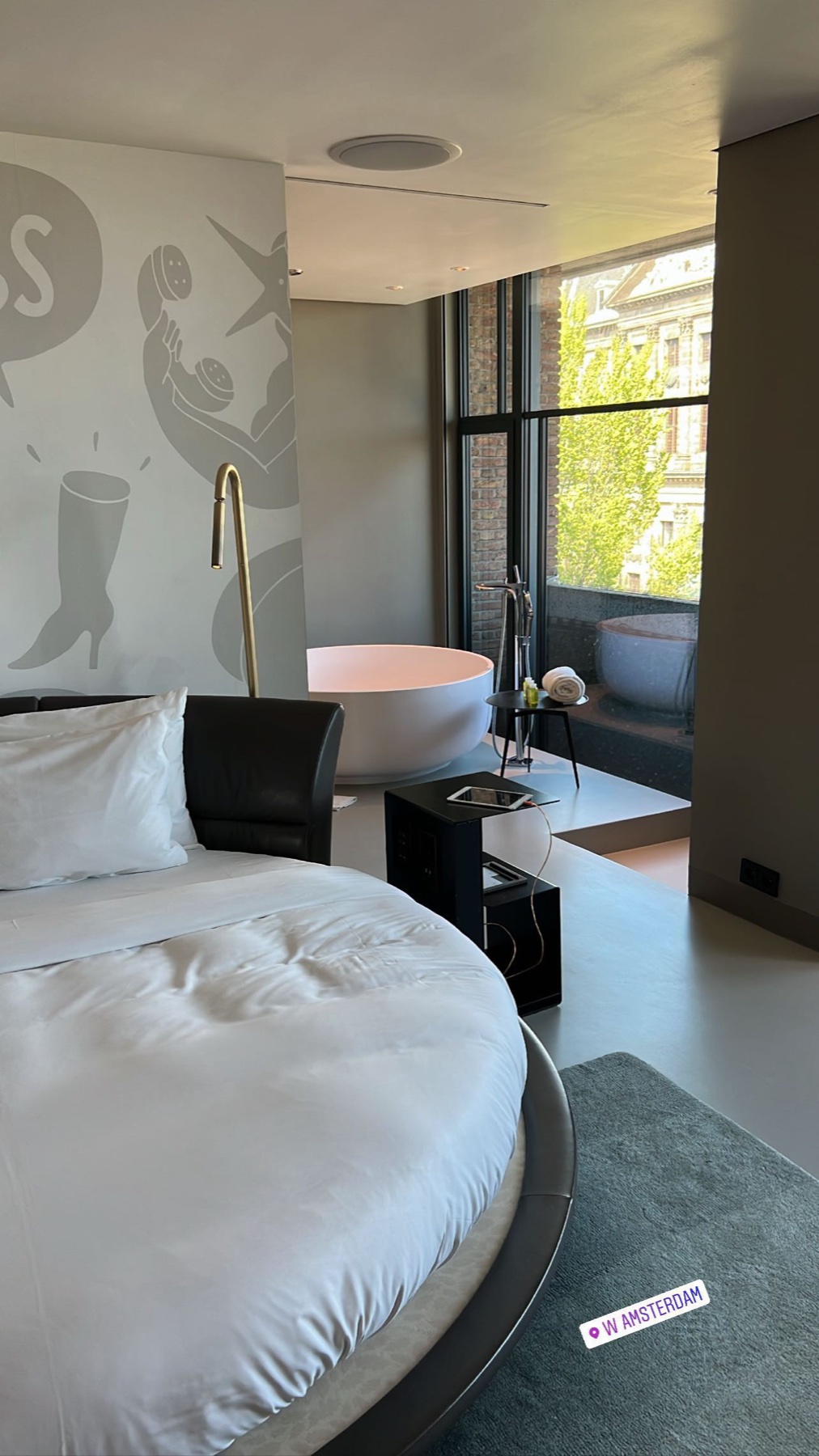
In my suite, the glass around the bed and the balcony immediately beside it made the setting feel unusually present. The bed itself was very nice. I remember that relationship between sleeping space and outdoors more clearly than any particular decorative object. It meant the room could be enjoyed simply by being in it, rather than needing an occasion or a group of people to justify its scale.
The architectural record published by the Catalan architects' association, with the project description credited to Bofill's studio, emphasizes the seafront position, natural light and views. That is the connection between the building as a city object and the building as accommodation. An iconic exterior can be mostly a benefit to the skyline. Here, the outlook was also something we received from inside the room.
02The suite and the sunset view
The suite was larger than the two of us required. That did not make it less enjoyable, but it separates what was memorable from what I would consider essential. I would be more interested in preserving the balcony, the outlook and the feeling around the bed than in reproducing every extra square metre. An upgrade can reveal a hotel's possibilities without becoming a sensible minimum requirement for every return visit.
It also changes how I would assess the stay's value. My experience includes the pleasure of receiving a room well beyond what I expected. Someone deliberately paying for a comparable suite has a different calculation to make. The useful question is what they want to spend time doing there: enjoying the room together, hosting other people, or leaving early and returning late. In our short visit, the sunset and the way the room opened towards it did more than the surplus space.
03Location: the beach and cycling the waterfront
I thought the location was exceptional. Barcelona is a city I like to explore by bicycle, and Amy and I spent a lot of time riding. The W's waterfront position worked with that preference. It gave the stay a combination I enjoy: an active city outside and a room with enough of a sense of place to make returning worthwhile.
That is a personal location judgment, not a claim that the W is beside every part of Barcelona someone might want to visit. The hotel sits at the port end of Barceloneta, rather than within the compact streets of the old centre. The sea is part of the reason to choose it. For a visitor who wants each day to begin among a different set of streets, cafés and museums, the same map may suggest a different base.
04The hotel now has a different operational picture
There is a significant current qualification to any booking recommendation. At the November 2026 check, W Barcelona's official notice said its second renovation phase would continue through late spring 2027, concentrating on ground-floor public spaces and guestrooms on floors one through six. The hotel says the rooms and suites in the sail building have already been renovated. My account is of the stay I remember, not a review of those newly completed interiors or the experience during the works.
The same notice says COYA and NOXE remain open during this phase. Their positions help explain the hotel's range: COYA is on the mezzanine, while NOXE occupies the twenty-sixth floor. I did not supply a dining or nightlife verdict from our visit, so these are current planning options rather than personal recommendations. For someone reserving during the renovation, the affected spaces and arrival arrangements matter more than a long list of facilities that may be operating differently.
I remember W Barcelona very positively because a brief visit produced a room experience I still talk about. The upgrade was generous, the bed and balcony arrangement worked beautifully for us, and the sunset gave that enormous suite a reason to matter. I would frame the hotel around that strength: a Barcelona stay in which the sea and skyline are part of the accommodation, particularly appealing if you enjoy getting out on a bike and returning to a room with a view.