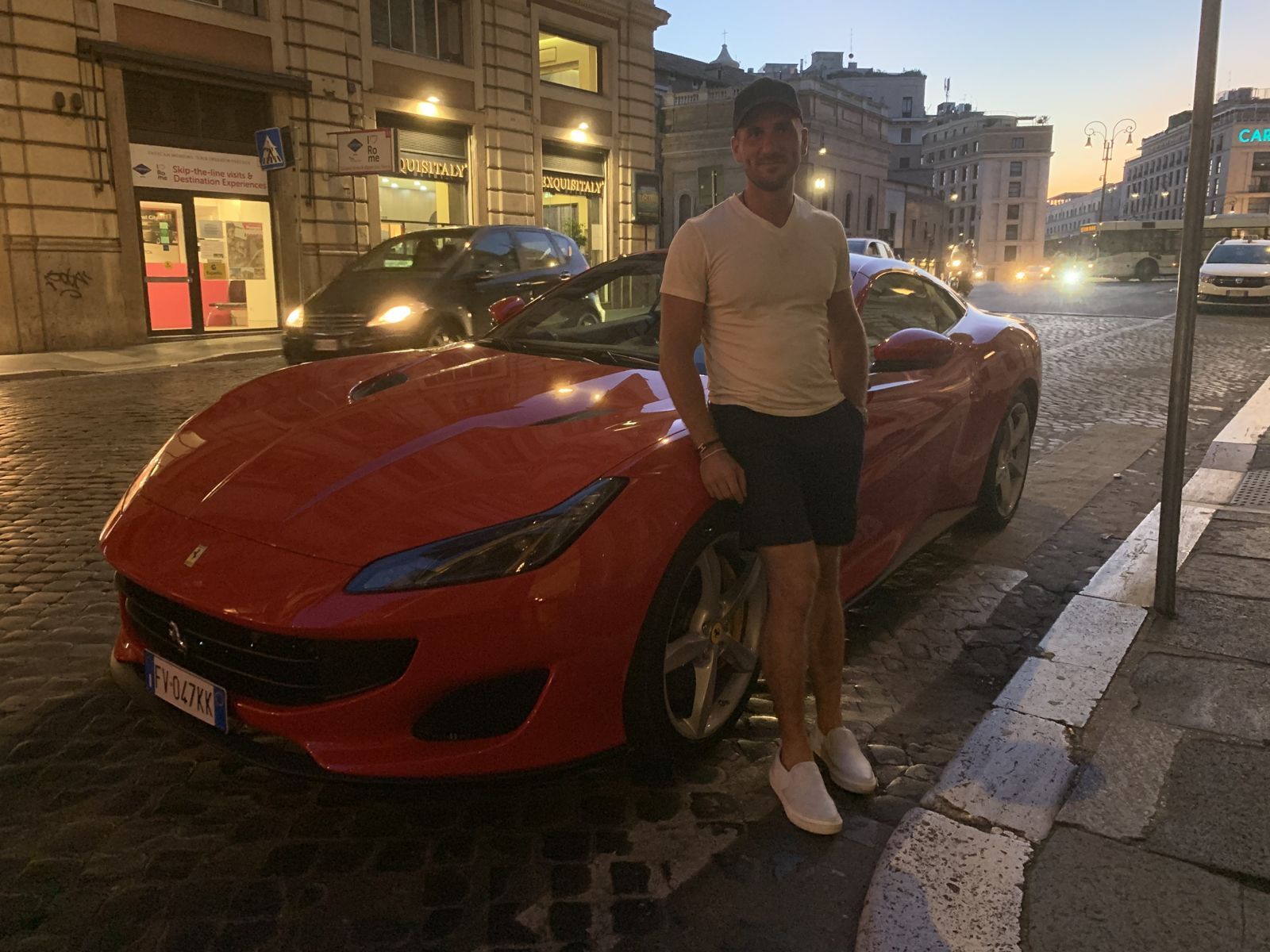
In July 2019, I rented a red Ferrari Portofino in Rome. The St. Regis concierge arranged it. The photograph I keep coming back to shows the car on cobblestones in the evening, with streetlights coming on and orange light behind the buildings. In the other pictures, I am behind the wheel with the roof down. The car belongs to the memory of Rome as much as the hotel does.
That is what made this rental important to me. A car can solve the problem of getting somewhere, but it can also become something I have travelled to do. With the Portofino, the object and the place became connected. A photograph of the same Ferrari in a showroom would tell a different story. Here, Rome supplies the setting, and I am actually using the car within it.
I have rented plenty of cars since then, and that distinction still guides how I think about them. Sometimes the right choice is whatever comfortably carries the people and bags at a sensible price. Sometimes I want a particular car enough to give it a place in the itinerary. This was one of the experiences that helped establish the second category for me.
Why a Ferrari Portofino suits Rome
Ferrari introduced the Portofino in 2017 as a V8 grand tourer with a retractable hard top. Ferrari’s 2017 annual report describes two rear seats intended for short journeys, alongside luggage space and a cabin designed for everyday use. That tells me more about the proposition than an acceleration figure: the design was trying to combine an occasion with some practical flexibility. Ferrari’s 2017 annual report
The rear seats are an important qualification. A nominal four-seat layout does not make a grand tourer equivalent to a comfortable four-adult touring car. For a future rental, the actual passengers and luggage would determine whether that flexibility was useful. The roof arrangement matters for the same reason. Choosing a convertible includes deciding how to use the space when travelling with bags, rather than considering only the photograph with the roof open.
My own photographs make the appeal much simpler. In the driving pictures, the open roof changes the composition: there is a steering wheel and a seat, but also trees, buildings and daylight around me. The car is part of the scene instead of enclosing it completely. With the roof open, the city remains part of the scene rather than being framed only by a windscreen.


For a holiday, that relationship can matter more than selecting the most extreme car available. I would rather have a car whose purpose fits the time I intend to spend with it. A grand tourer gives me a different starting point from choosing a machine primarily because of its track reputation. The question is what kind of day I want the car to make possible.
Is driving a Ferrari in Rome practical?
The evening photograph works because of its setting. The low red body sits against older buildings, uneven-looking stone and the changing light. The contrast gives the image character. It also makes the car feel specific to this trip, rather than interchangeable with every other rental photograph.
That visual appeal should not be confused with an effortless driving plan. Rome's mobility authority publishes different restricted-traffic zones and operating schedules, including separate daytime and nighttime arrangements. Before another rental, I would use its current guidance to settle access and handover details with the hotel and supplier. A hotel reservation by itself is not a route plan. Rome's official ZTL information
The useful decision comes before collecting the keys: what part of the visit is actually for the car? An afternoon spent enjoying a vehicle and an afternoon built around walking between sights ask different things of the day. Trying to fit both into the same small window can make an expensive rental compete with the destination it was supposed to enhance.
I would allocate time to the car as deliberately as I would to a restaurant or a treatment. That means enough room for the handover, the outing and the return, with a plan for where it will be left. Those arrangements are what allow the experience to occupy the foreground once the day begins. The photograph is the appealing part; the schedule gives it somewhere to happen.
How the St. Regis Rome concierge arranged the Ferrari
The St. Regis Rome matters to this story because its concierge made the introduction. I have spoken about that team elsewhere: its connections helped establish my expectations of what a good concierge could do. After staying in more hotels, I came to appreciate that this level of usefulness was not something I should take for granted. My St. Regis Rome review
There is a difference between being handed a list and having someone help turn a particular request into an arrangement. In this case, the result was the Portofino I wanted to rent. That is a concrete reason for valuing the hotel beyond the room. The stay became a base from which another part of the trip could take shape.
For a similar request now, I would describe the experience I want as well as name the car. The date, people, luggage and intended use help a concierge or supplier understand whether the request is workable. An exact-model preference deserves to be explicit, particularly when the identity of the vehicle is the reason for paying for it.
The rental remains its own purchase. The hotel's contribution is useful access and coordination; the car's terms, condition and return arrangements still need to be understood with the supplier. Keeping those roles clear makes it easier to judge the service properly. I can appreciate what the concierge accomplished without treating a hotel introduction as a substitute for the details of the booking.
Ferrari or scooter: two ways to see Rome
Returning to Rome has also meant renting scooters and spending time moving around the city that way. I love those visits too. The Ferrari did not establish a requirement that every later trip needed to become more expensive or more conspicuous. It established that transport could contribute something particular to a place and a moment. I explore the different purposes of those choices in A Ferrari and a Scooter in Rome.
That is how I judge an occasional special rental now. The extra money needs to buy an experience I actually want to make time for. If the day is full of things that happen away from the car, a different arrangement may serve it better. If the car is one of the reasons for the day, then choosing it carefully becomes part of the travel planning.
My interest eventually became a business through Privately Known, which I own. This page is part of that personal history, and the connection is worth making explicit. The broader lesson I took from being a customer is that enthusiasm for cars and honesty about their usefulness belong together. I would happily take an excellent ordinary rental deal when it fits the trip; that does not diminish what the Portofino meant in Rome.
Looking at these pictures, I see why the rental stayed with me. There is a particular car, a city I love and a hotel team that helped bring the two together. The lasting value was the experience those things created in combination. That is the standard I would use when deciding whether to do something similar again.