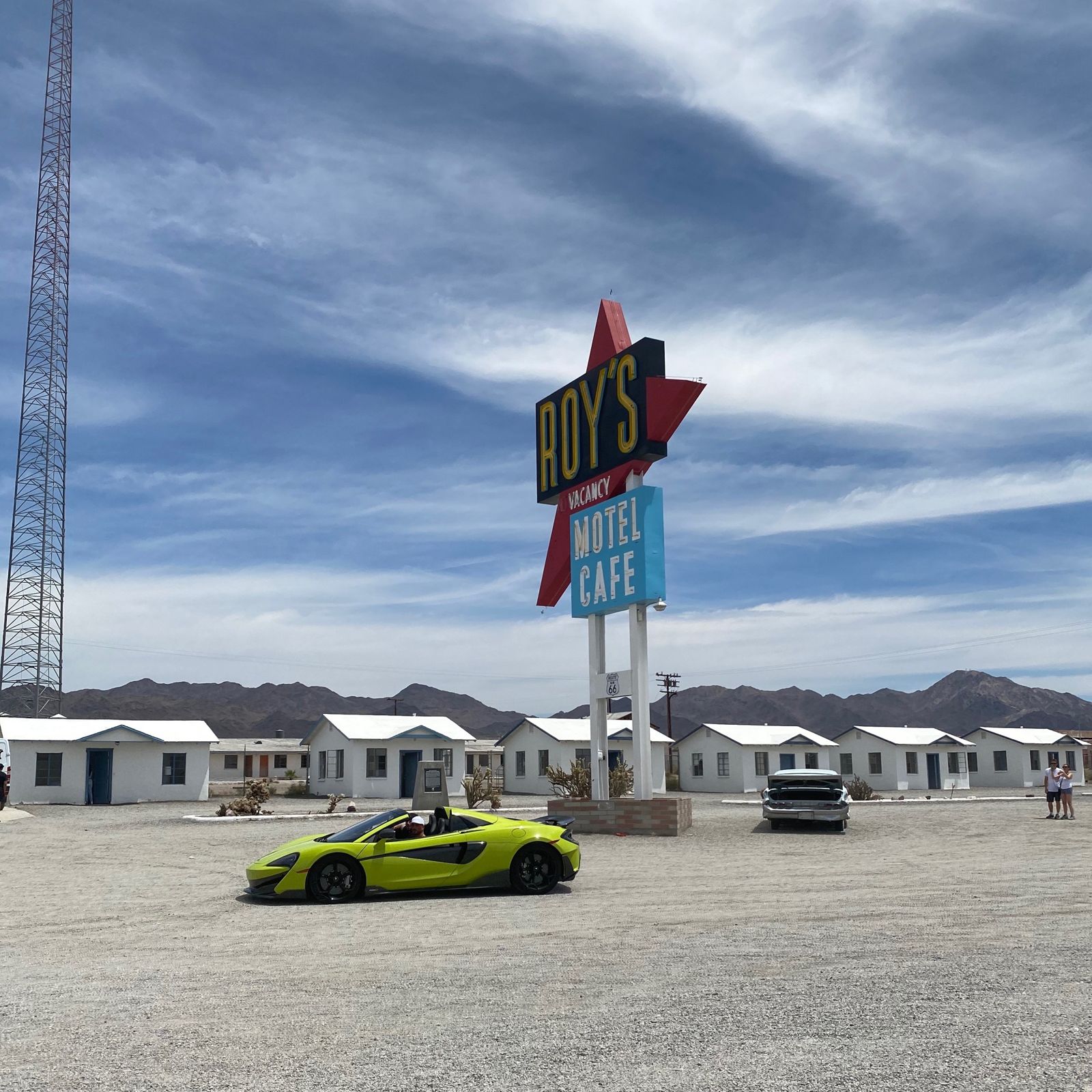
Some drives are the reason for the car. This one went from Las Vegas to Palm Springs in a lime-green McLaren. In the photograph at Roy's in Amboy, the roof is down and the car sits beneath the tall red-star sign. White cabins stretch across the background. Above them, the sky takes up much more of the frame than the car does.
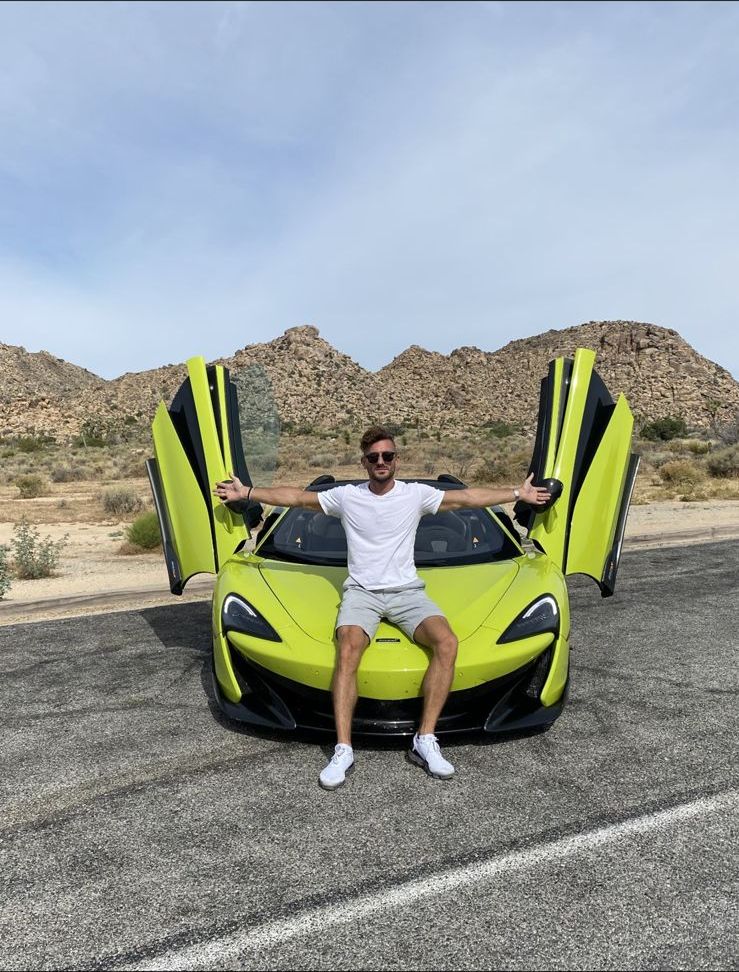
The other photograph is simpler: doors up at a roadside stop, with rocks and scrub behind the car. Together, the pictures explain the appeal better than a list of specifications would. There is a distinctive vehicle, a landscape with room around it and time spent outside the car looking at where the drive has led.
A particular car became part of a journey between two places. Las Vegas and Palm Springs are the endpoints; the stop at Roy's gives the space between them an identity of its own.
Stopping at Roy's in Amboy on Route 66
Roy's is much more than a convenient background. Visit California traces it to a gas station opened in 1938, followed by a motel, café and repair shop in the next decade. Its fifty-foot neon sign dates to 1959. The tourism board identifies the sign's design with Googie, the expressive midcentury style associated with roadside buildings. Visit California's Route 66 guide
The National Park Service places that history within Amboy's changing fortunes. The town grew out of nineteenth-century mining and railway activity, later serving Route 66 travellers who needed fuel, food and somewhere to sleep. Interstate construction bypassed it in the 1970s, leaving buildings whose original audience had largely moved to another road. National Park Service account of Roy's and Amboy
Looking at my photograph with that history in mind changes what I see. The sign was an invitation to a passing driver: notice this place and stop here. Its size and shape make sense in relation to a road, a moving vehicle and the distance across which it had to attract attention. The architecture was doing some of the work that a digital listing does for a traveller now.
The low cabins and enormous sign also create a distinctive sense of scale. The buildings sit close to the ground, while the sign reaches into the sky. The McLaren occupies a small, bright part of the foreground. I like that the car does not overwhelm the setting; it becomes one more element in a scene already organized around the presence of motorists.
Two eras of the same fascination
The car and Roy's belong to different eras, but they have something in common in this image. Both are designed to attract attention. One does it through a roadside sign and recognizable architecture; the other through colour, shape and the way its body opens. The photograph brings those two forms of design into the same frame.
The lime paint makes the connection especially strong. It stands apart from the pale buildings and muted ground without needing a close-up of a badge. The result is more interesting to me than a photograph of a car in an anonymous parking area. The place supplies character, and the car supplies a particular way of inhabiting the trip.
At the second stop, there is less architecture to share the frame. The raised doors become the most conspicuous shapes against the rock and scrub. The setting is still doing important work: remove it, and the picture would say much less about travel. These are rental photographs, but they are also records of stopping somewhere beyond the two destinations on the booking.
That is a good reason to leave space in a road trip. A drive can acquire its best images and most recognizable moments between the named places. If every hour is allocated to reaching the next appointment, there is little opportunity for the journey itself to become memorable.
How to plan a Las Vegas to Palm Springs drive
I would approach a similar trip by deciding how much of the day I actually wanted to spend travelling, including stops. That is different from asking only how quickly a navigation app can connect the endpoints. The car may be the expensive part, but time is what allows it to become an experience rather than a hurried transfer.
The photographs establish Roy's as a stop on this journey; they are not a complete record of every road I used. For a new trip, I would plan a current route rather than try to infer one from a sequence of images. Road conditions, services and the rental's permitted use belong to that present-day plan.
The shape of the day matters as much as its distance. A strict arrival commitment can make every pause feel like lost time. Leaving a generous arrival window creates room to get out, look around and enjoy a place without mentally subtracting the stop from the next reservation. That is a useful allocation of time when the drive is one of the reasons for taking the trip.
It also changes the choice of vehicle. If the journey is mostly a necessary connection between two tightly scheduled stays, comfort and capacity may deserve priority. If I am deliberately making a day of the car and the surroundings, a more distinctive rental can earn its place. The justification comes from how I will use it, rather than from the assumption that a more dramatic car automatically produces a better holiday.
What to check before a desert drive in a supercar
For a desert drive, I would settle the practical plan before becoming absorbed in the car. Fuel stops, current service availability, luggage fit and an agreed return arrangement need to work together. A convertible with the roof down makes a strong photograph; the bags and the rest of the journey still need somewhere to go.
Roy's name also deserves to be read as the name of a historic property, rather than an automatic promise of a functioning overnight motel. The Park Service's preservation account describes work toward restoring facilities, while Visit California identifies present-day fuel and shop services. Anyone organizing a new stay or meal should check the specific service they need. For this journey, Roy’s was a stop along the drive.
The rental agreement should support the intended journey too. A return in a different city, the planned mileage and permission for the chosen roads are matters to confirm with the supplier. The fact that a car would look good somewhere does not establish that the rental is arranged to go there. Getting those details clear makes it easier to give attention to the actual trip.
Why a McLaren road trip is worth renting for
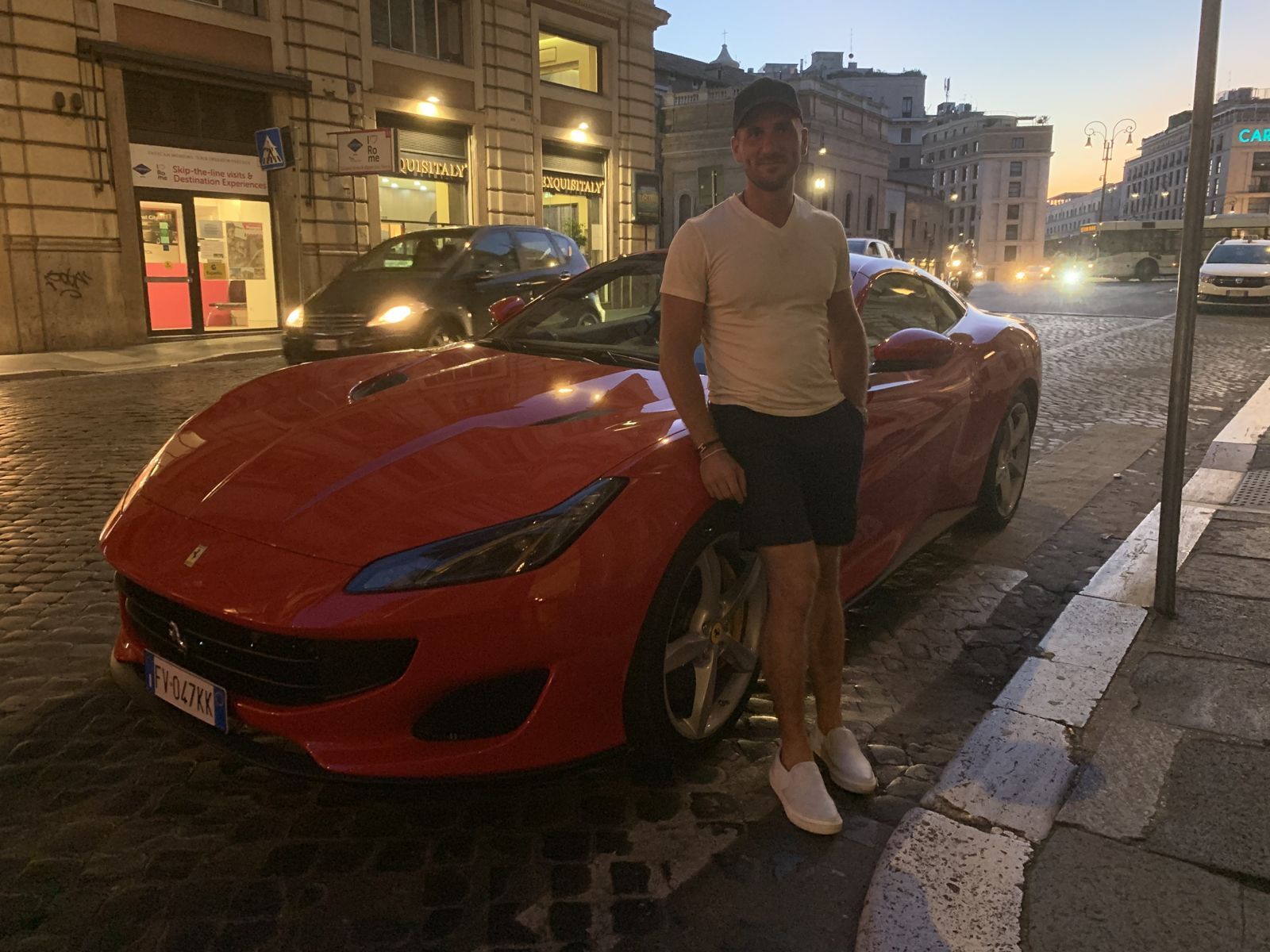
My Rome Ferrari rental carries a different setting and a different place in my travel history. What connects it to the McLaren is the decision to let a car become part of the destination experience. In Rome, the evening streets are central to the photograph. Here, it is a roadside landmark and the space around it.
That interest eventually became part of Privately Known, which I own. The commercial connection is separate from the historical rental shown here. A present-day recommendation or partner link should be judged on what it offers now, rather than taken as the identity of the supplier for this trip.
The image at Roy's is still the best explanation of what I wanted from the drive. The McLaren is distinctive, but so are the sign, the cabins and the enormous sky. None needs to stand in for the others. The pleasure of a trip like this comes from giving the car enough time and the right setting to belong to the journey.