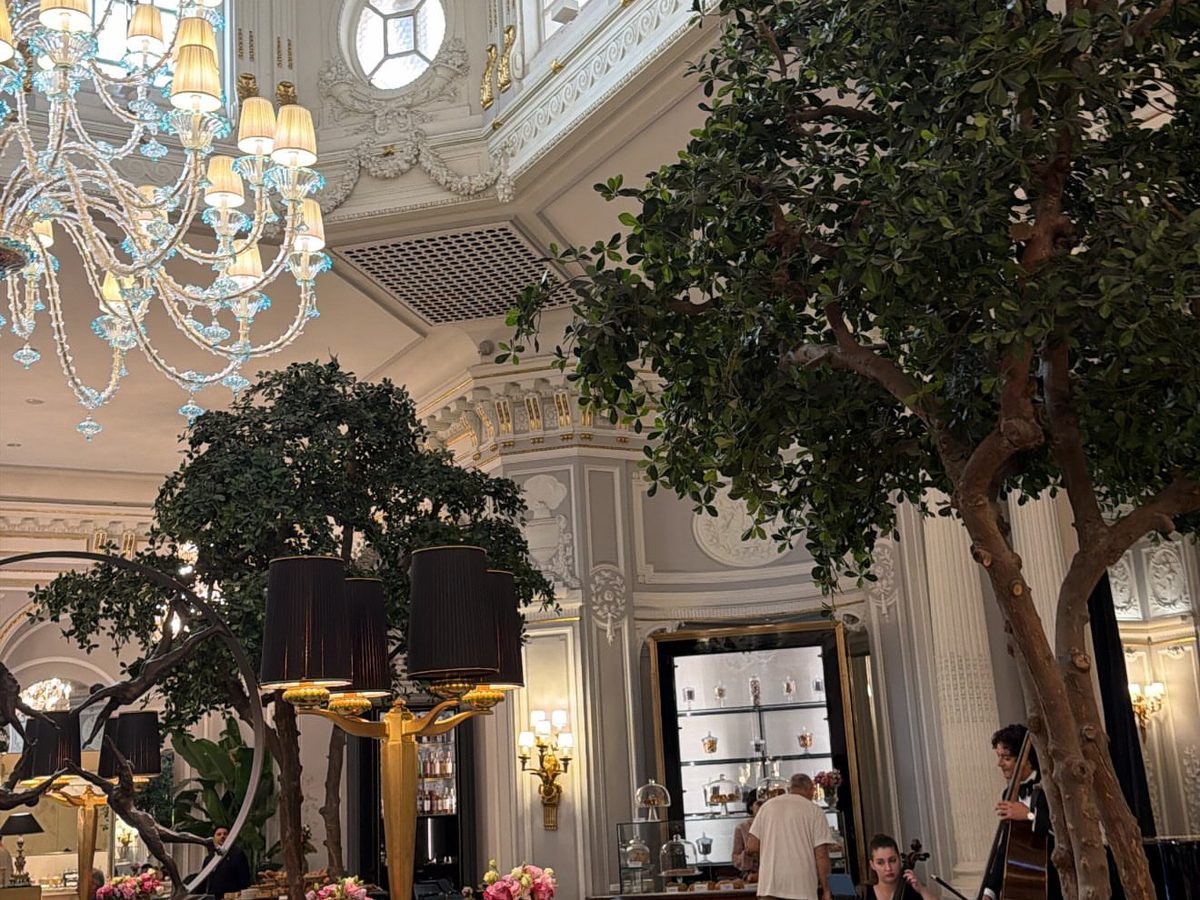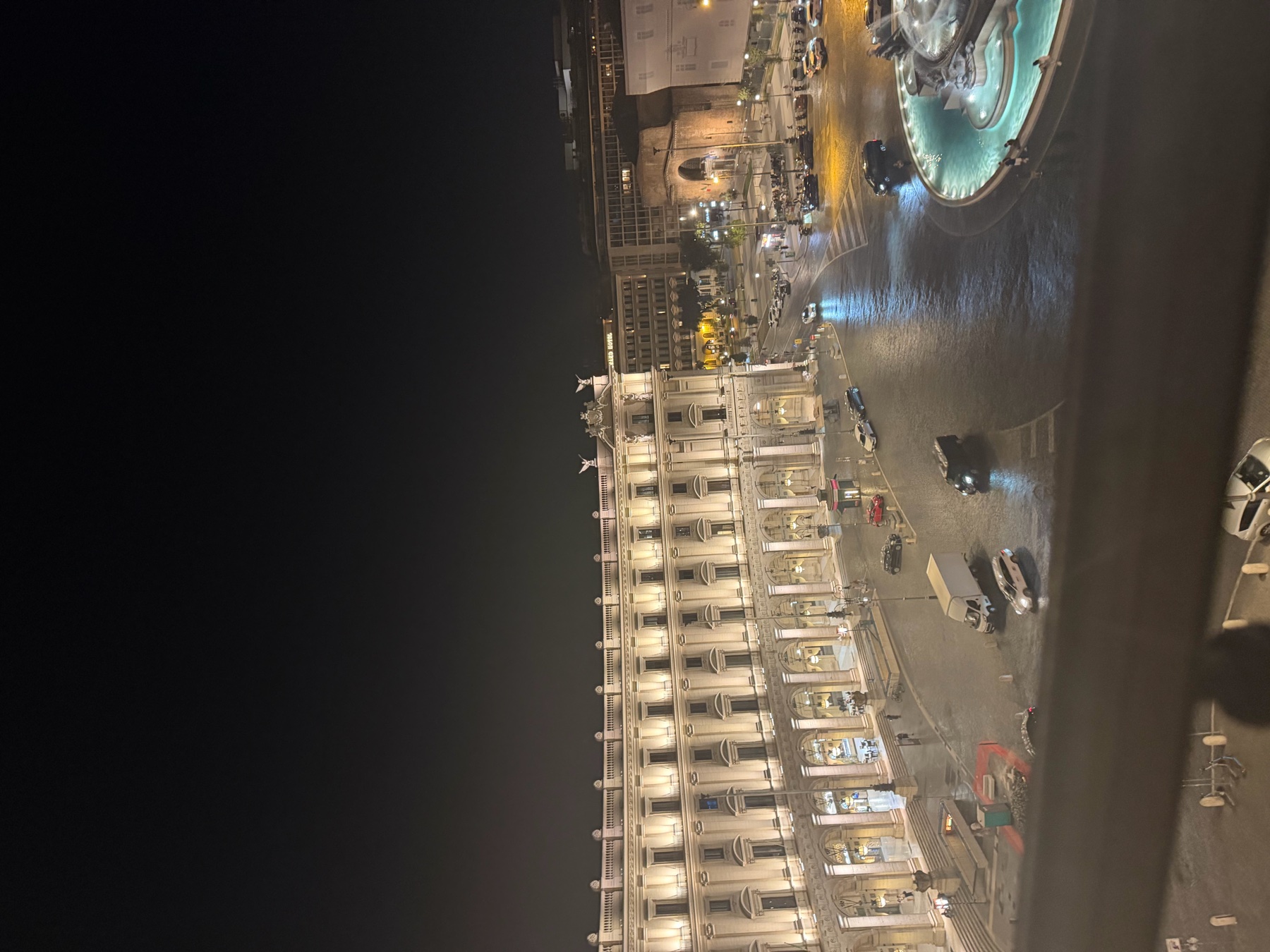
The rooftop pool was the obvious pleasure at Anantara Palazzo Naiadi. The more useful detail was that the hotel found somewhere to keep our rented scooter. We spent mornings and evenings chasing sunrises and sunsets on Rome's hilltops, then came back to a very nice junior suite with a balcony over Piazza della Repubblica. The hotel gave us things to enjoy on the property without becoming the whole trip.
We had initially needed a place in Rome before leaving, and our plans ended up stretching further. Palazzo Naiadi was an easy area for me to understand: my favorite Rome hotel, the St. Regis, is nearby, so I already felt familiar with this part of the city. That familiarity matters when plans are changing. I could enjoy a different hotel without spending the beginning of the stay getting oriented all over again.
01Balcony rooms at Anantara Palazzo Naiadi
I liked our junior suite a lot. The balcony looked onto the historic square, giving the room a specific Roman setting rather than simply a pleasant interior. A city view is often treated as an upgrade on a booking screen; here, being able to step outside and look over the piazza was one of the things that made the room worth remembering.
The current suite collection distinguishes the Junior Suite Piazza View from the Junior Suite Piazza View with Balcony. That is a meaningful distinction for anyone drawn to the same feature. Both currently list 43 square metres, so the extra appeal is not necessarily more indoor floor space. It is the relationship between the room and the square. A larger category with a different outlook would answer a different preference.
The view has a particular architectural logic. Rome's official account of Piazza della Repubblica explains that Gaetano Koch's nineteenth-century buildings follow the curve of an exedra of the ancient Baths of Diocletian. The fountain occupies the centre, while the basilica across the square incorporates another part of the baths. From the balcony, the attraction was the whole composition rather than one isolated landmark. It gives a relatively modern hotel stay a setting that could only belong to this part of Rome.
The hotel's building history also identifies archaeological remains beneath the property, visible through glass flooring on the lower level. That connection between the square's shape and what survives below makes the historic setting more substantial than a decorative palace façade. The balcony was worth having because it opened the room onto that setting; extra interior space alone would not have produced the same experience.
02The rooftop pool and restaurant
The rooftop pool was a highlight of the stay. Having somewhere to swim above the city changes the choices available between outings. Rome can make every free hour feel like an opportunity to visit another landmark; a pool gives a different reason to come back to the hotel for a while. I liked having both possibilities within the same day.
We also ate at the restaurant upstairs. I enjoyed its atmosphere, but my recommendation for the food is more reserved. It was a cool, lively place to be; I am not sure I would send someone there specifically for the meal. Those judgments can coexist. A rooftop can make an evening enjoyable without becoming the restaurant I would most want to revisit in a city full of other choices.
The hotel's dining directory and menus currently distinguish SEEN by Olivier's rooftop restaurant and bar from INEO's more formal dining. That gives a reader a useful way to choose the occasion, rather than treating everything served inside the same hotel as one restaurant. My rooftop experience should not be read as a verdict on INEO or on meals I did not describe.
Season also changes the proposition. At the November 2026 check, the hotel's leisure page says the rooftop pool is closed from October 5, 2026 until the summer 2027 season. The pool helped define our visit, so its availability deserves more weight than a minor footnote when comparing a winter stay with the one I enjoyed.
03Exploring Rome by scooter from the hotel
We rented through Bici & Baci, and the hotel's storage arrangement made the scooter practical. A rental is much more useful when the overnight part is straightforward. Otherwise, the freedom it promises during the day can turn into another problem to solve on the way home.
The rides themselves remain some of my strongest memories: going out for the changing light on Rome's hills and navigating around landmarks such as the Colosseum. This base worked because we wanted to range beyond the streets immediately around the hotel. Familiarity with the neighborhood made returning easy; the scooter made leaving it appealing. Someone organizing a visit entirely around walking to a particular cluster of sights would be weighing the location differently.
04Fitness and a welcome pause in the spa
We are both fitness focused, so I paid attention to the gym. It was nice, with Technogym equipment that felt brand new, although the selection was not extensive. I have encountered the same brand at the St. Regis and other Italian hotels. It is not my favorite equipment, but this was a useful gym within the limits of its size. The attraction was having a decent place to exercise during a city stay, rather than a facility that would draw me to Rome on its own.
We used the spa's shared area too. I remember the steam room, showers, cold therapy and jets. Some access was included with our stay, which made it easier to enjoy the facilities without building a separate occasion around them. The hotel's 2026 suite-benefits chart describes one wet-area admission for two people for junior-suite guests. That is the current published inclusion, rather than a promise of unlimited or daily access.
05The extra that took us beyond the hotel
Another benefit was a complimentary cultural-attraction ticket, which we used for Galleria Doria Pamphilj. I thought the visit was fantastic. We used an audio guide, paid nothing with the ticket the hotel had supplied, and even appreciated the practical convenience of having a bathroom available during a day out.
The gallery's current visitor information places its entrance on Via del Corso and includes an audio guide with admission, subject to availability. Our free visit came through the ticket we received; the gallery itself is not generally free. What I valued was the way the hotel benefit became an actual experience in Rome. It was more memorable than an inclusion that looks generous on paper but never finds a place in the itinerary.
I would return to Palazzo Naiadi. If it and the St. Regis Rome cost about the same, I would personally lean toward the St. Regis because of the attachment I have to it. That is a preference built over time, rather than a reason to dismiss this hotel. Palazzo Naiadi gave us a very good room, an enjoyable rooftop and useful ways to spend our time beyond its doors. For someone without my particular emotional tie to the St. Regis, those are substantial reasons to choose it on its own merits.