After a long drive from Florence, I wanted to exercise. We had just arrived at Palazzo Fiuggi, and the staff opened the gym for me that first evening. In a hotel built around wellness, that was a more persuasive welcome than a description of everything I could eventually book. Someone understood what would make the end of that particular travel day better and helped it happen.
I would absolutely go back. We spent about two nights, enjoyed the pool, had treatments and went out into Fiuggi, without having to buy a full wellness program for that visit. That is the experience behind my enthusiasm. Palazzo Fiuggi has a much more extensive medical and wellness operation than we sampled, but our short stay showed that the setting and hospitality could stand on their own as reasons to visit.
01The Palazzo Fiuggi gym
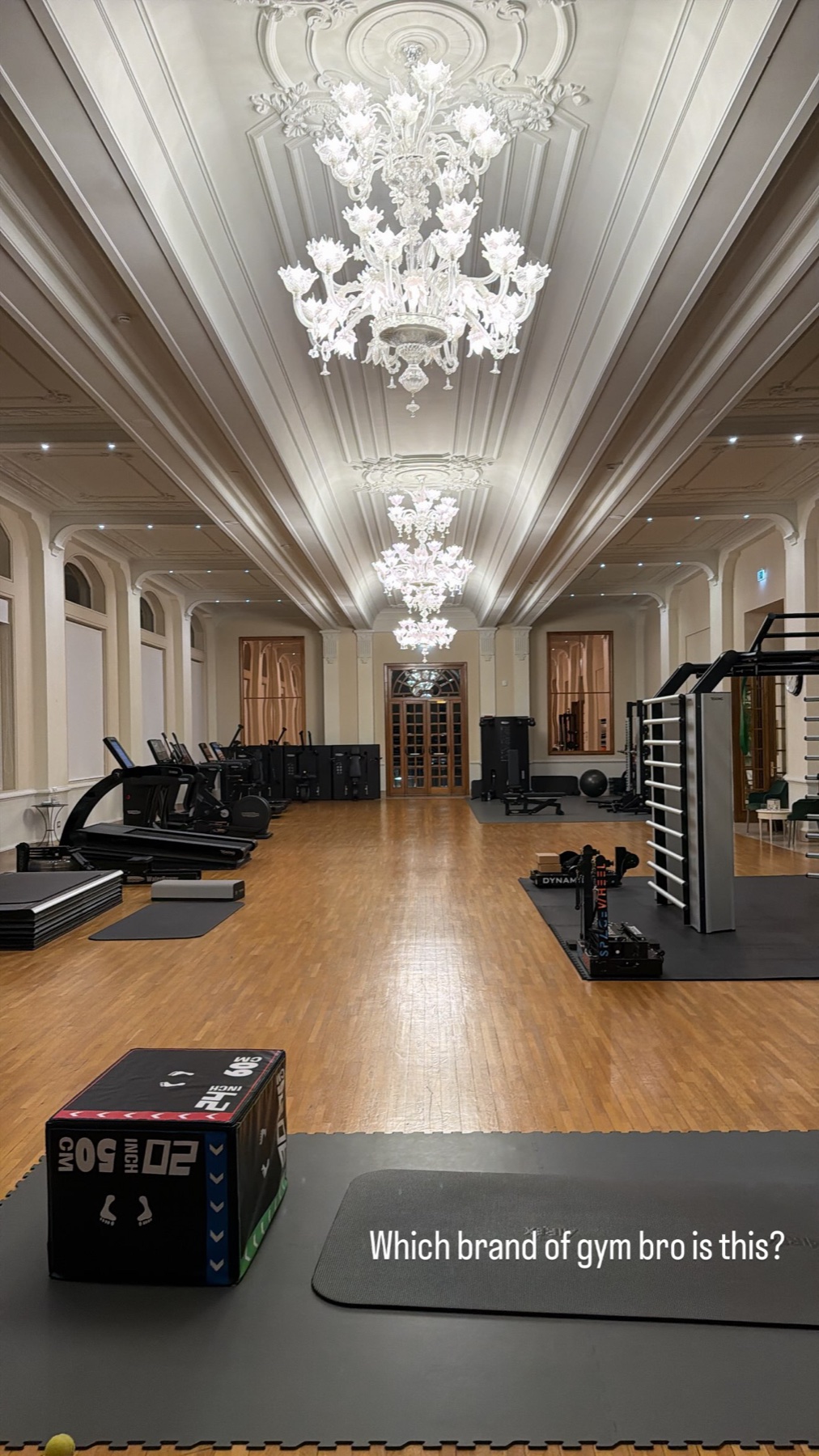
The gym is memorable even before considering the service. I remember the chandelier, which gives a space devoted to exercise an unexpected sense of grandeur. According to the hotel's Movement Lab description, the 400-square-metre gym occupies the former ballroom and includes Technogym equipment. That is a meaningful reuse of a major room: training has been given the architectural status that social entertainment once held.
A hotel can signal its priorities through the spaces it allocates. Here, the exercise facility occupies a room with its own history and presence, rather than an anonymous leftover corner. For someone as fitness focused as I am, that makes a difference. I liked the physical environment, and the staff's response on arrival made it useful at the moment I wanted it. The architecture and the service supported the same purpose.
The property's heritage account dates the building to 1913 and identifies its Liberty, or Italian Art Nouveau, style. Today's wellness retreat therefore sits inside a hotel conceived in an earlier culture of grand travel. The gym occupies a historic room being put to a different use, with the scale and character that come with it. That combination made the place more interesting to me than a purpose-built clinical environment would have been.
02Short stay or full wellness program?
The ability to stay briefly was central to why this worked. I did not want to commit every day of the trip to a prescribed sequence of appointments. We could experience the property, use facilities and arrange treatments while retaining time to go elsewhere. That gave Palazzo Fiuggi a role within a longer journey, rather than requiring the journey to be organized entirely around the hotel.
Our arrangement should not be confused with the current Wellness Break package. The published program runs for three or four nights and combines accommodation with meals, consultations, treatments and facility access. Its duration describes that package, not proof that every possible booking has the same minimum. Equally, our earlier short stay is not a standing promise that someone can reproduce the same terms today.
That distinction also explains why an online price can look startling. A package containing scheduled professional time, food and treatments is a different purchase from accommodation with selected extras. I find the advertised cost high, but comparing only the nightly figure can conceal what is being sold. The useful decision is whether the traveler wants the complete schedule or, as we did on this occasion, a shorter introduction to the place. Those are different uses of the same property, with different demands on time as well as money.
03The pool and spa treatments
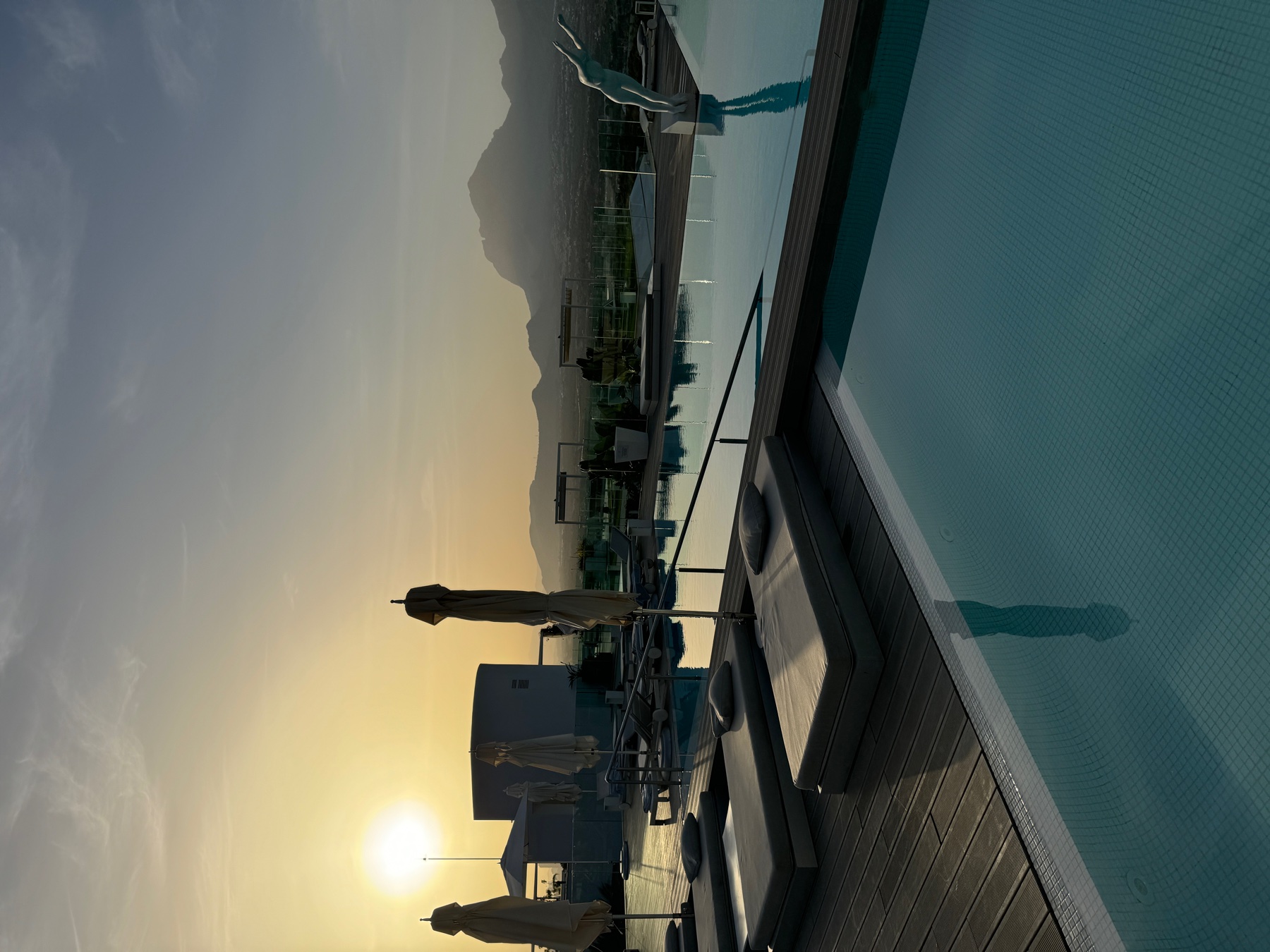
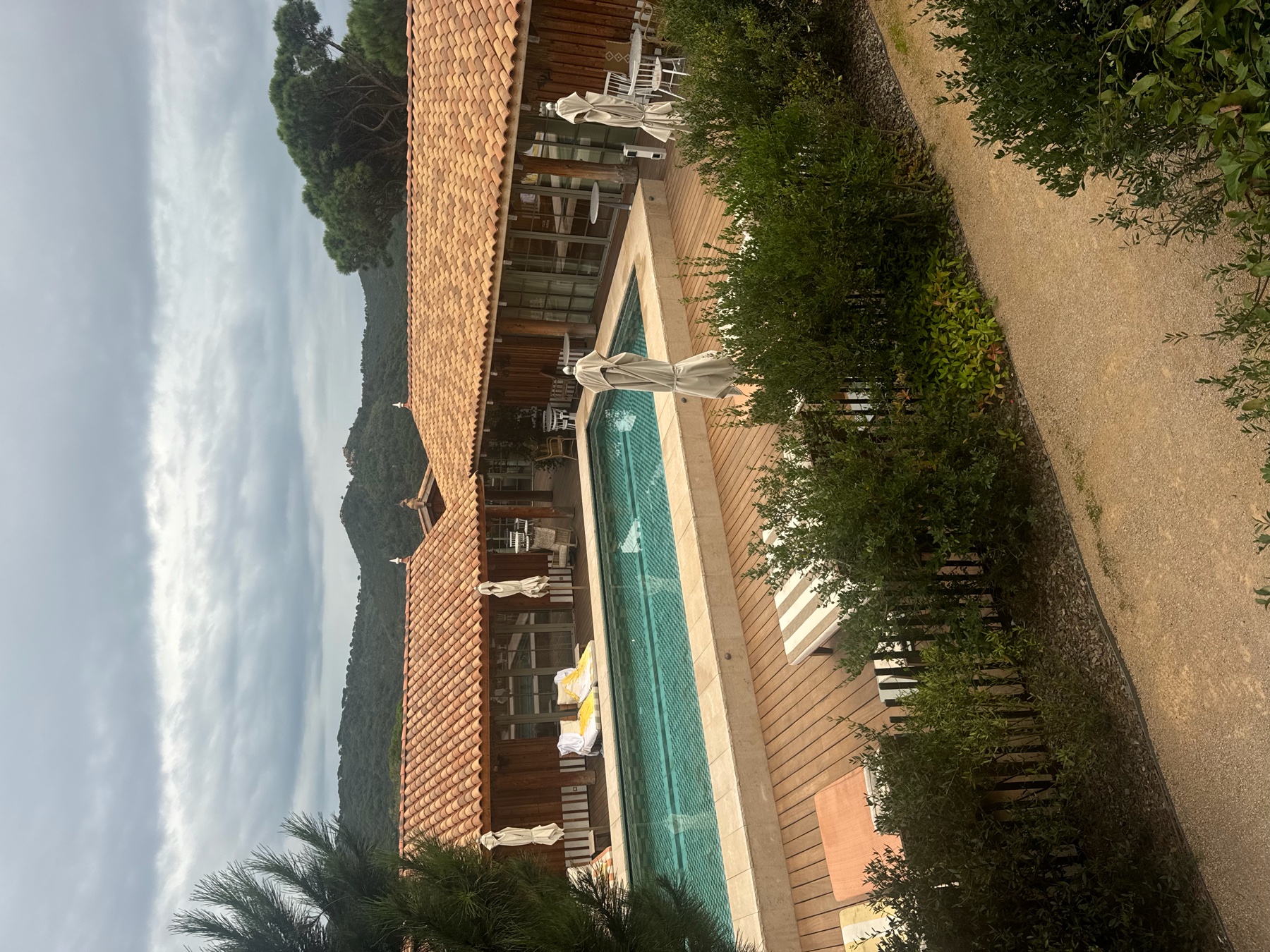
We used the indoor/outdoor pool and liked it very much. It provided an enjoyable part of the stay without turning every hour into an appointment. That balance mattered: I wanted access to serious wellness facilities, but I also wanted the simple pleasure of being in a good pool at a beautiful hotel. The more elaborate operation around it did not make that ordinary enjoyment less valuable.
I had a magnesium bath and a massage. I remember the bath as a benefit arranged through our Fora booking, which added something tangible to the stay. I would keep that as an account of our arrangement, rather than assume it is included with every advisor reservation now. The massage was a separate experience; neither the treatment names nor the hotel's medical language need to be turned into a claim of health results to explain why I enjoyed visiting.
The Roman Thermae provides further context for the size of the operation. The hotel describes a 700-square-metre wet area connected to the main building, with views toward the old town, saunas and Turkish baths. I did not use the steam room, so my recommendation is narrower than that full facility list. The pool and the treatments I actually tried already gave the short stay a satisfying shape.
04Eating well without losing the town
The hotel's food felt healthy, but we also ate in town often and enjoyed walking around Fiuggi. I liked having that freedom. A wellness property can become so complete that the destination outside its grounds almost disappears; in our case, the surrounding town remained part of the trip. The hotel supplied a particular kind of experience, and going out supplied a different one.
The current nutrition approach involves personalized menus and a culinary program associated with Heinz Beck. That helps explain why food here is integrated into the wellness offer rather than treated as an unrelated restaurant amenity. It also means a guest booking a structured program may be making a different dining commitment from someone primarily interested in a hotel break. My enjoyment of eating out should not be read as a description of how every program is designed to work.
There was a Korean restaurant in town that I particularly enjoyed, although I do not have a sufficiently reliable name to recommend a specific address. The broader point is that Fiuggi gave us reasons to leave the grounds and come back. I would retain that part of a return visit. The appeal of the hotel did not depend on treating the surrounding place as merely the road used to reach it.
05Why I would return
I group Palazzo Fiuggi with SHA and Hacienda AltaGracia when thinking about memorable wellness trips, but they are not interchangeable experiences. What distinguished this visit was how well a short, flexible stay worked inside a much more ambitious operation. I could appreciate the gym, pool and treatments without claiming to have evaluated the entire medical program.
The staff opening the gym after our drive remains the clearest example. The property had invested in an impressive facility, and a person made it available in a way that mattered to me. I would return for that combination of setting and practical hospitality, while choosing the booking format around the time I actually wanted to spend there. Two enjoyable nights left me interested in more, rather than feeling I had only seen an expensive list of things I had not done.