I stayed at Villa Barberino for one night for a wedding. The room was a nice one-bedroom suite, but the water went out during the stay. My overall feeling was that the accommodation was not quite for me, and I would not choose to return for a holiday of my own. That is a limited verdict on a short visit, rather than a judgment on the occasion that brought me there.
The distinction matters at a property like this. A wedding gives everyone a particular reason to be in the same place; an independent holiday asks the hotel to provide that reason itself. Villa Barberino has a historic setting, gardens and a pool that make its event appeal understandable. Whether those are enough for a leisure stay depends on what you want the accommodation to do around them. My experience did not make me want to build another trip around it.
01A restored Tuscan village
Villa Barberino is in Meleto Valdarno, in the municipality of Cavriglia. Its own account of the property describes a villa and adjoining village restored by the Boni family from 1988 onward. Rooms and apartments occupy a place that has served several purposes over time, rather than a resort conceived from scratch around identical bedrooms. That is useful context for understanding the attraction: the architecture and grounds supply a sense of place before a guest has done anything.
The estate's history traces successive ownership and rebuilding, including an eighteenth-century phase when the Alamanni family added a mill and farmhouses. I find that agricultural layer more informative than trying to turn every old wall into a medieval claim. A compound that grew through domestic and working uses can offer a different experience from a formal villa with a handful of guestrooms. The interest lies in how its separate buildings and outdoor spaces come together.
02The suite and a water outage
My room gave me enough space, and I remember it positively as a one-bedroom suite. In a restored property with both rooms and apartments, the actual configuration matters more than the name. Having a separate living area was a welcome part of my short stay.
The water interruption is the practical problem I remember. I cannot supply a reliable explanation of its cause or duration, or claim it represents conditions today. It was nevertheless part of my stay and affected how I felt about the accommodation. Reliable basics carry a lot of weight on a one-night visit, when there is little time for other experiences to change the impression. A good-sized room was a positive; it did not erase that inconvenience.
03What the grounds add to a longer stay
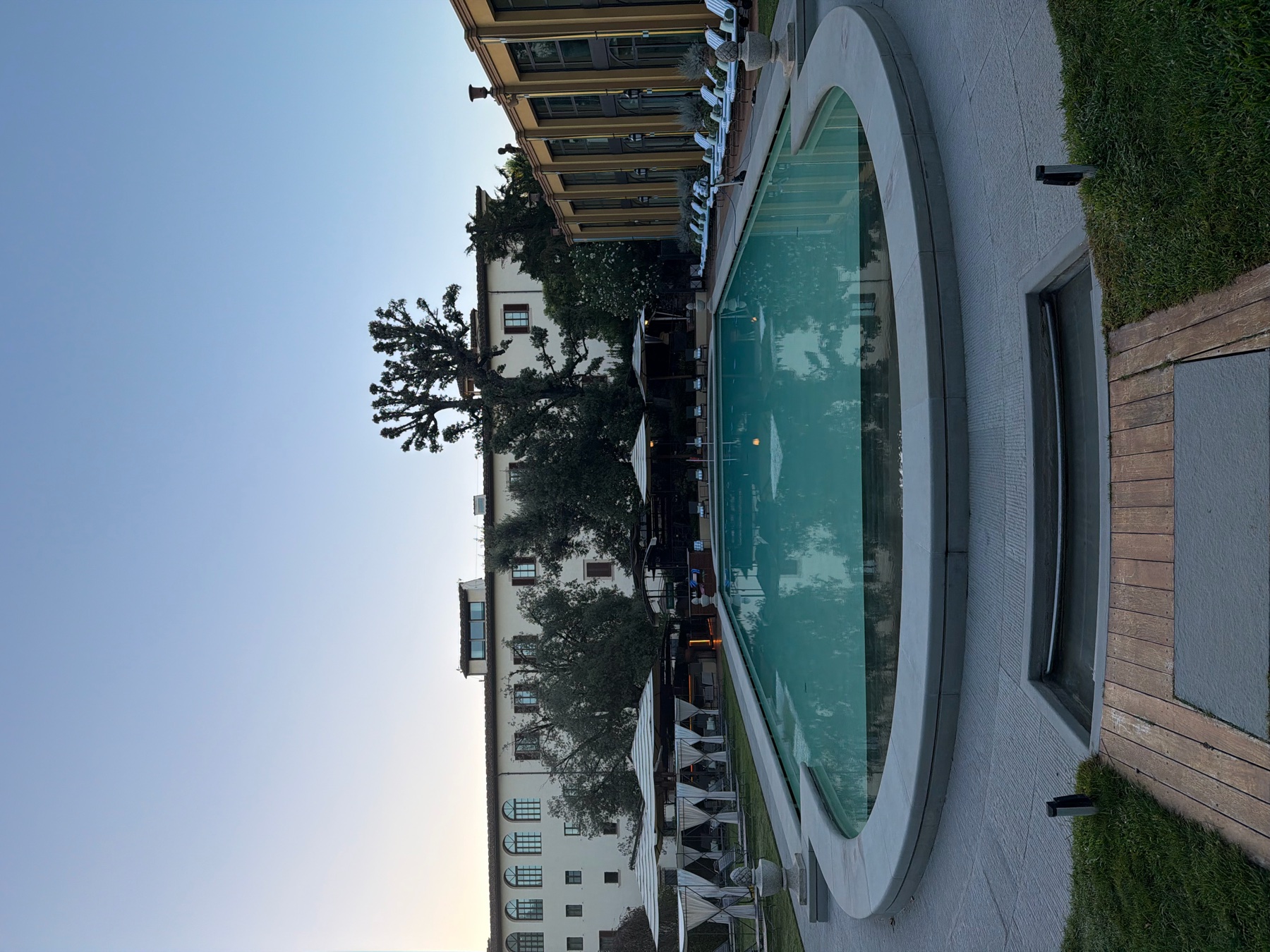
The pool is one of the property's leisure features, although I am not reviewing a day spent swimming there. The current pool page describes sun decks, a whirlpool area and seating among olive trees, with an adjacent former barn containing a bar and terrace. It currently gives a May-through-September operating season. That seasonal distinction is more useful than a generic promise of a pool: it changes how much of the hotel's outdoor proposition is available to a guest travelling outside summer.
Dining has a similarly distinct role. Il Tributo presents Tuscan cooking with a seasonal menu, and the restaurant's history dates its opening to 1991. The hotel describes summer dining in the small square outside, while the pool terrace has a lighter offering. Those are different settings from a wedding meal. The published restaurant menu is a useful way to judge whether a longer stay's ordinary evenings would appeal; my account does not provide a separate restaurant verdict.
04Villa Barberino as a wedding venue
Villa Barberino's wedding information makes clear that events are a central part of its business. It describes an indoor historic hall accommodating up to 150 guests, gardens and other outdoor spaces, and specifies that catering is handled in house. For a couple considering the venue, that last detail is consequential: the culinary arrangement is part of choosing the property, rather than something freely assembled from outside suppliers. My experience as an overnight guest is only one part of that larger decision.
The location also deserves more precision than simply “Tuscany.” Visit Tuscany's account of Cavriglia places it at the foot of the Chianti mountains and describes the area's history of lignite mining, now interpreted at the MINE museum. This is a worked landscape with an industrial past as well as villas and cultivation. That gives an extended visit a potentially more interesting subject than using the countryside solely as a backdrop for photographs.
The museum would be a possible outing on a longer trip, rather than somewhere I visited. It helps define what someone could choose this area to explore beyond an event. For my own holiday, though, the accommodation would need to be part of the reason to come. Villa Barberino made sense as the place we were gathering for a wedding, while my brief stay left me inclined to choose somewhere else next time.